
For most private trips, the Sacred Valley comes before Cusco. You fly into Cusco, sleep lower in the valley, go on to Machu Picchu, and leave the city of Cusco for the last nights. A first night in Cusco still fits when the flight or the train makes the city the only practical place to sleep.
Why the first highland nights are lower
The order is an altitude decision, then a calendar decision. The CDC Yellow Book says the risk follows how fast you gain sleeping altitude. Fitness does not change it. The same chapter advises against going from low altitude to a sleeping altitude above 2,750 m (above about 9,000 ft) in one day, and it says that 2 to 3 nights around 2,450 to 2,750 m (about 8,000 to 9,000 ft) before going higher is markedly protective. For cities such as Cusco, it says travelers can sleep lower than the airport for 1 to 2 nights and then ascend.
That is why a private transfer from the Cusco airport goes to the Sacred Valley on arrival, and the city of Cusco waits until later, usually after Machu Picchu. The fuller note, including what to ask a doctor, is how we prepare for altitude. This page is only the order of the nights. It is general travel information, not medical advice, and it is not a promise about how anyone will feel.
How high each place is
Official publications do not measure the same point, so the figures sit close to each other and are not identical. Feet here are a conversion of the metre figure, not a second survey.
- Cusco city: 3,399 m (about 11,152 ft) in PROMPERÚ's traveler guide. INEI's Compendio Estadístico Cusco 2025 lists the district capital at 3,439 m and, in its provincial table, 3,414 m. The CDC uses approximately 3,350 m when it names Cusco. Every one of those figures is higher than the valley towns below.
- Urubamba, in the Sacred Valley: 2,871 m (about 9,419 ft), the same PROMPERÚ guide. INEI lists that district capital at 2,885 m and, in the provincial table of the same compendium, 2,869 m.
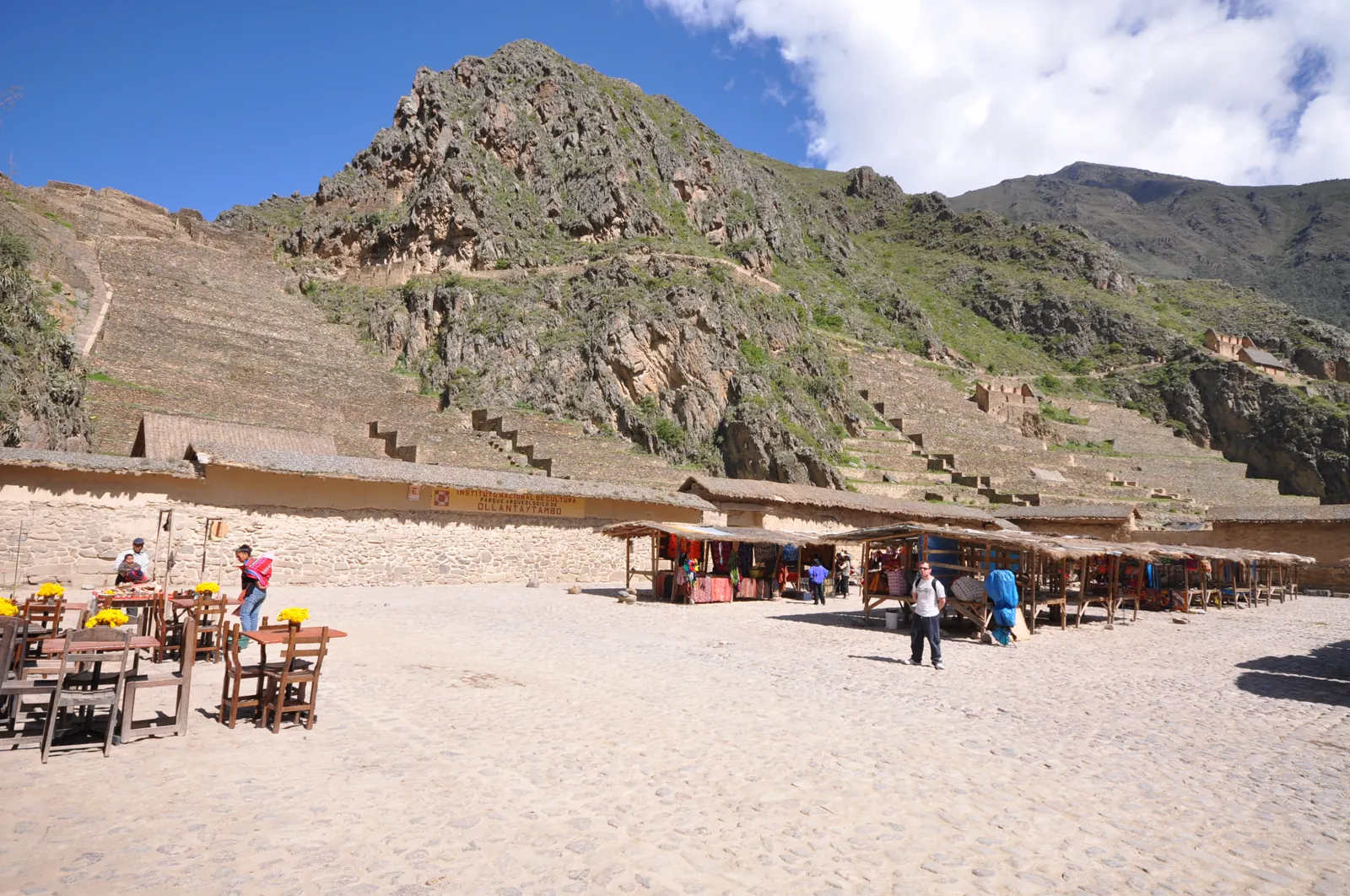
- Ollantaytambo, the living Inca town and the station we usually use for the train: 2,851 m (about 9,354 ft) in the MINCETUR inventory of the town (ficha 12780, 5 May 2025), and 2,871 m (about 9,419 ft) as the INEI district capital.
- Machupicchu Pueblo, the town travelers call Aguas Calientes: 2,040 m (about 6,693 ft) on the district municipality's page, and 2,092 m (about 6,864 ft) in the INEI compendium.
- The Machu Picchu sanctuary: 2,430 m (about 7,972 ft), UNESCO. The same municipal page also writes 2,400 m for the Inca city. We use UNESCO's 2,430 m for the sanctuary.
Urubamba and Ollantaytambo are lower than Cusco. They are still above 2,750 m, so they are not the intermediate band the CDC names. They are the lower first stop this route allows. Aguas Calientes is lower again. The sanctuary sits between the town and Cusco. Lima, where the trip starts, is on the coast.
Not every stop with a Sacred Valley address is lower. INEI lists the district capital of Chinchero at 3,759 m, above Cusco. A night in Urubamba or Ollantaytambo is the lower sleep. An afternoon up at Chinchero on the day you land is a different altitude. If that stop matters, we put it later in the trip.
When Cusco comes first
Three situations change the first night. None of them is a medical rule.
A late flight
PROMPERÚ puts Urubamba at about 1 hour by car via Chinchero (62.3 km) and Ollantaytambo at about 1 hour 45 minutes via Chinchero (82.2 km). MINCETUR's inventory records about 1 hour 30 minutes (59.8 km) from Cusco to the main square of Ollantaytambo. If the flight that fits the dates lands late, that drive can finish after dark, and a first night in Cusco is the calmer choice. The valley is the next morning.
A train that boards in the Cusco area
On a private trip we usually board at Ollantaytambo, which keeps the night in the valley and shortens the rail ride. Some tickets board in the Cusco area instead. Which station that is depends on the operator and the month. If the ticket you hold names a Cusco-area station, the night before that train belongs in the city. Stations, months and the ride are in the train guide. We do not promise a seat. We request the train, and we request tickets as soon as you confirm, subject to availability.
The flight home
A night in Cusco before an early departure is the last night, not the first. The valley, and usually Machu Picchu, still come ahead of the city. How many days the whole trip needs is in how many days in Peru.
If you have already spent at least 2 nights above 2,750 m in the 14 days before the trip, the CDC notes that recent exposure is useful. Whether that changes the order is a question for your doctor.
Sample orders of nights
These are orders of nights, not packages, and they have no prices. The longer shape, still without a fixed product, is the 10-day itinerary.
Order A, the one we start from
- Lima, on the coast, at the start.
- Two nights in the Sacred Valley, in Urubamba or Ollantaytambo.
- Machu Picchu next: either one night in Machupicchu Pueblo, or a day by train from Ollantaytambo with the night back in the valley.
- Cusco city for the last nights, before the flight out.
Order B, a shorter highland stay
- Two nights in the Sacred Valley, with Machu Picchu as a day by train from Ollantaytambo.
- Two nights in Cusco after that.
Order C, Cusco first
- One night in Cusco on arrival, when the flight is late or the train boards in the Cusco area.
- Two nights in the Sacred Valley.
- Machu Picchu from Ollantaytambo.
- Cusco again only for the night before the flight out, if that flight needs it.
A private car is what makes A and B simple: the airport transfer goes to the valley. That private shape is luxury private tours, and the Spanish page is viaje de lujo a Perú a medida. Advisors placing the nights for a client can start from the travel advisors page. The citadel day itself is the private Machu Picchu tour.
Who this order helps
- Seniors. The first nights are the ones that feel the altitude. Starting lower is the calmer way to the same citadel. See Machu Picchu for seniors and, in Spanish, Machu Picchu para adultos mayores.
- Families, including grandparents traveling with grandchildren. The CDC says children are as susceptible as adults. The pacing is in Peru with grandchildren and, in Spanish, Perú con nietos. The private family shape is the family tour.
- Honeymooners. The same order, with empty hours in the day. See is Peru good for a honeymoon, the honeymoon page, and, in Spanish, luna de miel en Perú.
- Travel advisors. The decision is the order of nights: Lima, then the valley, then Machu Picchu, then Cusco, unless the flight or the rail ticket says otherwise.
Acclimatization, as general information
This is not medical advice. Ask a doctor before the trip, especially with a heart or lung condition, or if anyone takes regular medication. The CDC also recommends pre-travel advice for a high-altitude trip.
On the trip itself, the published guidance we follow in the plan is simple. Go up gradually. Keep the first day easy. The CDC says to avoid alcohol for the first 48 hours at altitude and to keep exercise mild for those same 48 hours. Drink water, eat lightly, and change the day if someone feels unwell. That flexibility is the point of a private trip. The altitude guide has the fuller note. We also recommend travel insurance that covers medical care.
Machu Picchu tickets are a separate step from the order of nights. We request tickets as soon as you confirm, subject to availability. We do not guarantee a ticket, a circuit or an hour.
FAQ
Should we go to the Sacred Valley or Cusco first?
For most private trips, the Sacred Valley comes first. The valley towns are lower than Cusco, so the first highland nights are the lower ones, and Cusco city comes later, usually after Machu Picchu. A first night in Cusco still fits when a late flight or a train that boards in the Cusco area makes the city the practical place to sleep.
How high are Cusco, Urubamba, Ollantaytambo, Aguas Calientes and Machu Picchu?
PROMPERÚ lists Cusco at 3,399 m and Urubamba at 2,871 m. Ollantaytambo is 2,851 m in the MINCETUR inventory of the town and 2,871 m as the INEI district capital. Machupicchu Pueblo, also called Aguas Calientes, is 2,040 m on the district municipality page and 2,092 m in the INEI compendium. UNESCO lists the Machu Picchu sanctuary at 2,430 m. Official figures differ by the point measured, and each one is cited in the article.
When does a first night in Cusco make more sense?
When the flight lands too late for the drive to the valley, or when the train ticket boards in the Cusco area rather than at Ollantaytambo. A night in Cusco before the flight home is the last night, not the first.
How many nights should we spend lower before Cusco?
The CDC describes 2 to 3 nights around 2,450 to 2,750 m before going higher. Urubamba and Ollantaytambo are lower than Cusco and still above 2,750 m, so they are the lower first stop on this route, not that exact band. Two nights in the valley is the order we start from. This is general information, not medical advice.
Who benefits from starting in the Sacred Valley?
Travelers who want the first highland nights lower than Cusco: seniors, families with children, honeymooners, and anyone flying up from the coast. A private car makes that order straightforward. Ask a doctor before the trip.
Do you guarantee Machu Picchu tickets for this order?
No. We request tickets as soon as you confirm, subject to availability. We do not guarantee a ticket, a circuit or an entry hour.
Request a private quote. Tell us the dates, who is traveling, and whether a flight or a train has to board in Cusco. We will set the order of nights around that, and we request tickets as soon as you confirm, subject to availability. Request a quote. Questions? WhatsApp +51 982 521 128 or travizperu@gmail.com. We reply as soon as possible.
Sources (accessed 25 Nov 2026)
- PROMPERÚ, Guía práctica para el viajero Cusco (information updated September 2023; third reprint July 2025). Cusco 3,399 m; Urubamba 2,871 m. Urubamba via Chinchero 62.3 km, about 1 hour by car; Ollantaytambo via Chinchero 82.2 km, about 1 hour 45 minutes: https://cdn.www.gob.pe/uploads/document/file/5250066/4721561-cusco_gppv_espanol.pdf
- INEI, Compendio Estadístico Cusco 2025 (Cusco, December 2025). Table 1.2, altitude of the district legal capital: Cusco 3,439 m; Urubamba 2,885 m; Chinchero 3,759 m; Ollantaytambo 2,871 m; Machupicchu 2,092 m. Table 1.1, provincial figures: Cusco 3,414 m; Urubamba 2,869 m: https://www.inei.gob.pe/media/MenuRecursivo/publicaciones_digitales/Est/CompDptal2025/Cusco2025.pdf
- MINCETUR, Inventario de recursos turísticos, ficha 12780, Pueblo de Ollantaytambo, altitude 2,851 m, dated 5 May 2025. Access from Cusco (calle Pavitos) to the main square: about 1 hour 30 minutes, 59.8 km: https://consultasenlinea.mincetur.gob.pe/fichaInventario/index.aspx?cod_Ficha=12780
- Municipalidad Distrital de Machupicchu, Información general: Machupicchu Pueblo at 2,040 m; the same page writes the Inca city at 2,400 m: https://munimachupicchu.gob.pe/munimapi/index.php/machupicchu/informacion-general
- UNESCO World Heritage Centre, Historic Sanctuary of Machu Picchu, 2,430 m: https://whc.unesco.org/en/list/274/
- CDC Yellow Book, High-Altitude Travel and Altitude Illness. Cusco approximately 3,350 m. Acclimatize for a minimum of 2 to 3 nights around 2,450 to 2,750 m before going higher. Avoid a first-night sleep above 2,750 m when coming from low altitude. For Cusco, sleep lower than the airport for 1 to 2 nights. Avoid alcohol and keep exercise mild for the first 48 hours. Fitness does not change the risk: https://www.cdc.gov/yellow-book/hcp/environmental-hazards-risks/high-altitude-travel-and-altitude-illness.html
This page is general travel information. Altitude notes follow published CDC guidance and are not medical advice. Official altitudes differ by the point measured; each figure above names its source. We do not guarantee a Machu Picchu ticket or a circuit.